
Reform UK voters are complex. They don’t fit neatly into traditional left/right boxes. Instead, many orient their beliefs around a distinct brand of national populism — one that pits the ‘ordinary British person’ against a range of elites: global corporations, unaccountable CEOs, ‘woke’ cultural institutions and out-of-touch liberal politicians.
Understanding this worldview is critical for anyone looking to engage these voters. We need to start by understanding how they both think and feel.
Our review of the public opinion data shows that Reform’s voter coalition is split broadly into two main groups: Blue Reform voters who lean heavily toward a small-state worldview, and Red Reform voters, who are far more open to state intervention and the need for strong regulations.
Red Reform voters — often living in so-called ‘Red Wall’ seats — tend to have voted Labour at some point in the last two decades and to leave the EU. They may have lent Boris Johnson their vote in 2019 in order to ‘Get Brexit Done.’ Whilst they are culturally conservative, they are not economically liberal. They respect authority and rules. But crucially, they don’t believe today’s politicians are up to the job.
More in Common’s latest segmentation of UK voters clusters these types of people into a specific group – Rooted Patriots – who represent roughly 20% of the population. Their analysis adds a little more colour to how these voters think and feel:
“A patriotic but politically untethered group which feels abandoned and overlooked by political elites and yearns for leaders with common sense, but does not want to overthrow the system as a whole. They are particularly concerned about community decline and the pressures of migration. Interventionist on economics but conservative on social issues, they have shaped much of Britain’s politics over the past decade.”
They also note they are “proud to be British but believe the country’s best years are behind us.” They put a lot of value on fairness (as the graph below illustrates) and are frustrated by the economic elites they believe have rigged the system in their favour. This strong sense of unfairness leads to a conviction that hard working people deserve more respect than they are given by a system that doesn’t value their contribution.

In Part 3 of our exploration of Reform UK’s voter coalition, we draw on Unchecked UK’s research with ‘Red Wall’ voters, More in Common’s latest voter segmentation, and Persuasion UK’s recent message testing with Reform UK voters, to outline three recent videos which could resonate with ‘red Reform’ voters. We think all of them do a great job at channelling anti-elite sentiment into support for rules that protect ordinary working people.
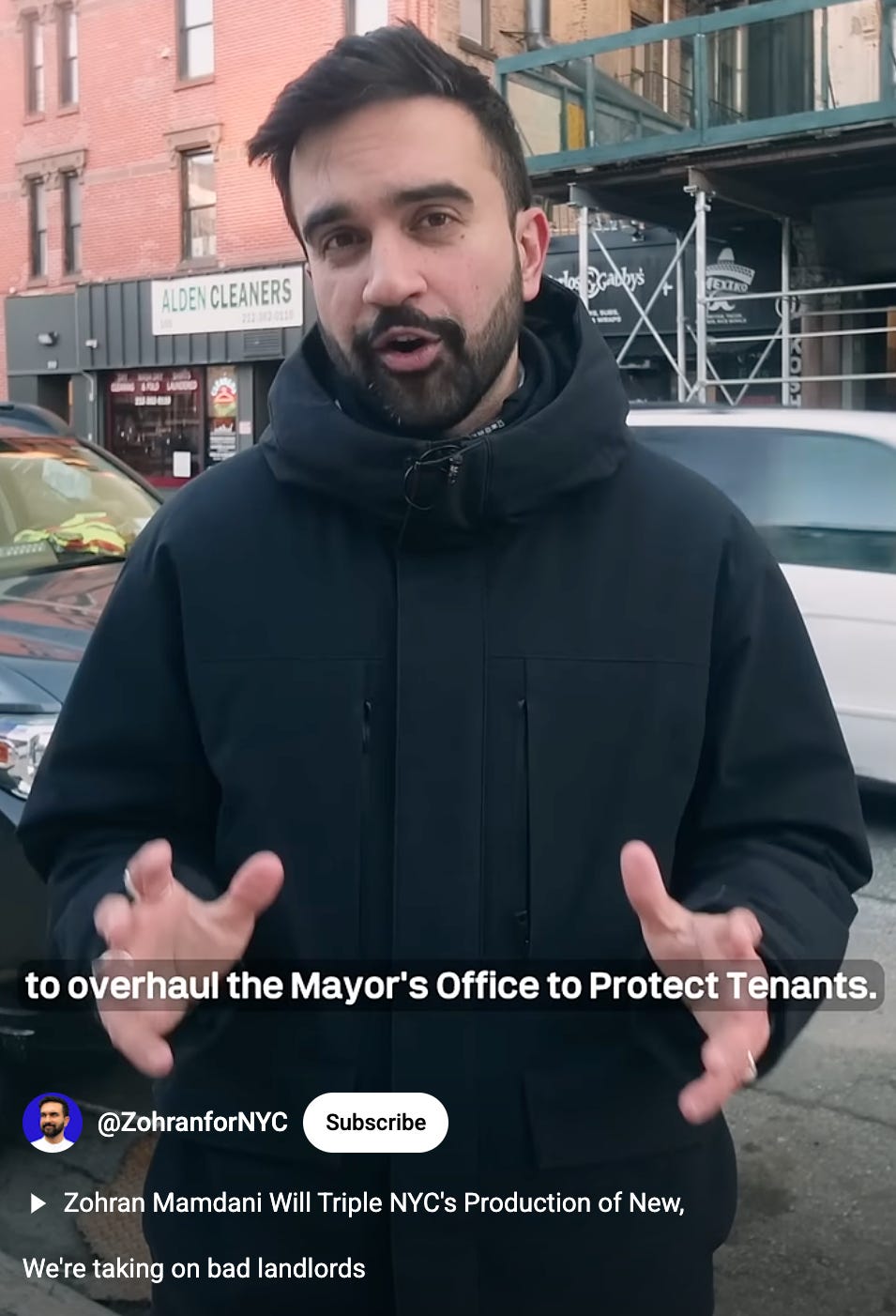
1. Zohran Mamdani takes on landlords
Red Reform voters have a strong instinct for fairness. They believe the system is rigged in favour of elites and are angry at those who bend or break the rules to get ahead. Also, as the graph above shows, these voters place a high value on authority – only ‘Traditional Conservatives’ place a higher value on it – meaning they strongly value law and order, and are particularly opposed to those who flout the rules.
That’s why messages about ‘rules with consequences’ are likely to resonate. This means highlighting how regulation favours ordinary people: the decent, hardworking Brit who plays by the rules — not the billionaire landlords and corporations who cut corners or profit from harm.
Zohran Mamdani’s video is particularly effective at doing this. Not only does he draw attention to the unscrupulous landlords ripping off tenants, he is clear and direct about how he will solve the problem – stronger enforcement, harsher penalties and, if needed, public ownership.
These interventions are likely to land well for two reasons. First, it draws a clear line between the people who are failed by weak rules (tenants) and the ones who profit (rich landlords) by breaking the rules. This clarity is likely to appeal to direct thinkers – an ultra-direct message which boils down to ‘if you do wrong, you should face consequences’. The emphasis on punishment of wrongdoing and enforcement of the rules taps into a clear, common sense understanding of right and wrong.
2. The TUC expose Farage’s double standards
Red Reform voters are not animated by attempts to shrink the state and deregulate the economy. Quite the opposite. Deregulation can therefore be framed as a way for the populist right to reward their rich financiers at the expense of ordinary working people.
Persuasion UK’s recent research suggests this type of message could land particularly well. They found that the strongest message that turned voters away from Reform UK was highlighting how the money that Reform has taken from different interest groups – oil and gas especially – and used it to question Farage’s motivations.
The TUC captured this dynamic brilliantly in their viral vox pop video in Nigel Farage’s seat of Clacton. The clip, which has been viewed more than 2.3m times on X alone, exposes Farage for voting down the Employment Rights Bill, which was designed to boost protections for ordinary working people.
“I am really surprised because I thought he was working for the public”, says one constituent.
“I did think he was more for the people”, says another.
The visible shock among locals, discovering their MP had sided with big business over working people, is a powerful moment. It exposes the false hope offered by right-wing populists and pierces Farage’s pro-worker façade, revealing the true loyalties of Reform UK.
By linking Farage to a pro-corporate, deregulatory agenda, videos like this lay bare who really benefits, and shows clearly that parties like Reform UK do not have working people’s best interests at heart.
3. Greens Organise call out our rigged economy
Red Reform voters believe the ‘great’ has been lost from ‘Great Britain’. They think the country is lawless and broken, and they are strongly sceptical about the impact immigration is having on the country.
However, as More in Common’s analysis suggests, Rooted Patriot’s concerns around immigration are more closely tied to insecurity and economic pressure than the cultural objections fanned by Reform UK. This suggests that a different story around insecurity and economic pressure – especially one that ties it into corporate excess and abuse – could appeal to these voters.
Greens Organise released a video in March this year which was particularly good at this. They reframed local struggles in Dartford as something caused not by foreign migration, but by the foreign ownership of local businesses and local infrastructure. The video makes the strong case that a rigged economic system allows global financial elites to profit at the expense of local workers and families.
Making this case to Red Reform voters is likely to be difficult. Concerns over immigration are entrenched and the main reason most of these voters backed Farage at the 2024 election was to reduce levels of immigration.
But it’s not impossible. As our analysis showed, Reform UK voters are equally sceptical of both globalisation and big foreign businesses. The message from Greens Organise, which foregrounds the exploitative nature of foreign ownership, could redirect concerns about immigration into a wider conversation about wealth extraction, redistribution, community renewal and local agency.
Final Thought
Red Reform voters aren’t looking for lofty ideology. KSBR, the strategic comms firm that lead Unchecked UK’s focus groups, called them ‘Red Wall Realists’ because they believe themselves to live in the ‘real-world’ – away from Westminster bubbles and metropolitan elites. They value pragmatism, decisiveness, and ‘straight talkers’. More in Common’s recent segmentation confirms a similar dynamic as many believe the government should be prioritising ‘straight-forward’ solutions to Britain’s problems.
Regulation is nuanced and complex. It is therefore no surprise that many comms specialists – including in the government – become very technical very quickly. What makes the videos we’ve highlighted work is that they ditch the jargon and lean into what really matters: fairness for ordinary people and connect with lived experience (note how all of them are filmed on the streets).
Unchecked UK launched Populism Unpacked to support us to respond to what we believe is the biggest threat to environmental and social protections – the populist right. Our goal is to generate insights that are genuinely useful. We have now released the first three insights through this initiative and we would really value your feedback via our poll below. Thanks!