
Just over a fortnight ago, Keir Starmer and Donald Trump sat down to sign the UK-US Tech Prosperity Deal. For the Prime Minister – and the Chancellor, no doubt – the promise of £31 billion in inward investment to set up a network of data centres and AI infrastructure offered them a rare sigh of relief in an otherwise torrid return from the summer recess.
But the deal hasn’t been entirely plain sailing. Behind all the back-slapping the government has faced serious questions over who really stands to benefit in the long run. There is, after all, undoubtedly some sort of quid-pro-quo going on here. The tech behemoths involved in the deal – Nvidia, OpenAI, Microsoft, and others – are not charities after all, and they will certainly not be investing billions with no strings attached.
The biggest question facing the government is over what compromises the UK has made to appease Trump and the tech giants. Reported to be on the table are demands to water down the Online Safety Act, scrap the 2% Digital Services Tax, and clip the wings of other regulators like the Competition and Markets Authority.
If true, the government will face a deeper set of questions over how they intend to safeguard the public interest whilst bending the knee to the behemoths of Silicon Valley. And if the polls are to be believed, perhaps the bigger question facing the country is what will happen the UK’s relationship with big tech companies if Reform UK do form the next government.
The ‘Goldilocks Zone’
Chatham House experts suggest the government is attempting to position itself in the ‘Goldilocks zone’ – a middle ground between the current ‘techno-libertarianism’ of the US and the more cautious regulatory framework being implemented by the EU. In reality, that means diluting an already weak framework of checks and balances to gain inward investment and secure concessions in Trump’s trade war.
If the tech lobby gets what they want, that will likely mean three major changes. Firstly, it will mean the Online Safety Act is weakened. This intensely detailed piece of legislation was introduced as a way to protect children online and curb the worst harms of social media. But tech companies have railed against the new legal duties to remove harmful content and introduce costly age verification checks, and have therefore been seeking to chip away at it.
Second, it will mean AI copyright protections are watered down further. Ahead of Trump’s visit to the UK Mick Jagger, Paul McCartney and other major British artists wrote to Keir Starmer, criticising him for failing to defend artists’ rights from AI tools. This new partnership with American AI firms will only cement the dominance of these platforms over the creative industry.
And third, the new deal could mean the Digital Services Tax is abolished altogether. The 2% levy on big tech firms, modest by any measure, ensures at least a sliver of the profits extracted from UK users stays in the UK economy. Silicon Valley would prefer that money flow straight back across the Atlantic – and now it most likely will.
These are the foundational principles of the UK’s digital democracy. No wonder the same experts at Chatham House labelled the government’s strategy “hazardous”. Cosying up to Silicon Valley will certainly bring some welcome respite to a struggling UK economy, but being in hock to these powerful foreign companies may come back to bite us in the long run.
Big Tech’s inroads into the UK
If this reality feels risky, the prospect of Nigel Farage getting the keys to Downing Street could be worse. In recent years, Farage has been busy forging links with a range of tech actors and has begun to openly champion parts of the industry.
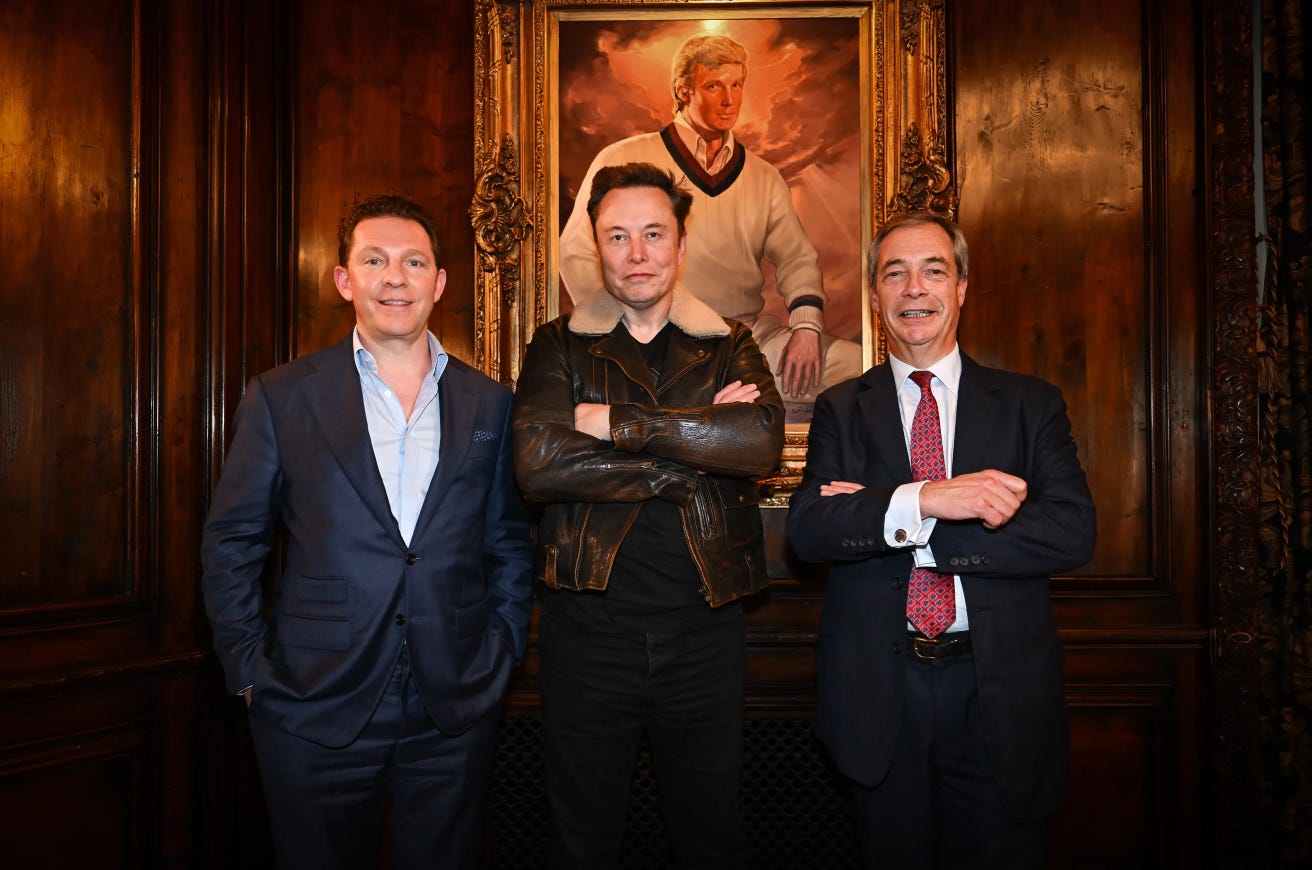
His relationship with the tech giants began with a brief spell as Elon Musk’s favourite populist poster boy. Photos of them side by side in Mar-a-Lago led to rumours that a $100 million donation was on the cards for Reform UK. Had this happened, Reform UK would have been bankrolled by a man with deeper pockets than most global governments. Thankfully, it was not to be.
Since his acrimonious split from Musk he’s turned his attention to the world of crypto. The leader of Reform UK recently announced plans to turn Britain into a ‘crypto powerhouse’ through a new ‘Cryptoassets and Digital Finance Bill’ which would cut capital gains tax on crypto assets from 24% to 10%. The party also now accepts donations in crypto and recently had crypto firms sponsor panels at their party conference – including a panel with Zia Yusef entitled ‘Crypto and the Future of Finance’.
Over summer Reform dropped further hints of what we can expect if they win the next general election. Whilst Labour is considering amending the Online Safety Act to placate Silicon Valley, Farage said his party would scrap it in its entirety. Criticising the ‘dystopian’ online environment the act has created, Farage said the new ‘state suppression’ of free speech would even ‘make Xingpin blush’.
Big tech’s incursions into the UK government are nothing new. Recently leaked documents show that Peter Thiel – founder of the software company Palantir – held secret meetings with Dominic Cummings and Boris Johnson in 2019 the year before his firm was given a central role in the government’s pandemic response. The controversial US tech firm, which also supplies technology to the Israeli Defence Force, has since continued to be rolled out across UK public infrastructure, despite opposition from workers.
The Tony Blair Institute has also received £257 million since 2021 from Larry Ellison – the founder of software company, Oracle. Some staff have since left the think tank saying the cash injection had led to a form of ‘AI boosterism’ that had turned it into a lobbying vehicle for Ellison.
The big tech industry has been knocking at the door in Britain for some time. Labour’s ‘Goldilocks Zone’ threatens to leave the door unlocked to their unchecked ambitions. But with Nigel in charge, Reform UK would rip the door of its hinges and invite the tech giants in.
Nigel’s populist paradox
The deregulation of big tech once again brings Nigel’s populist credentials into question. Just as the images of Donald Trump’s inauguration showing the President flanked on either side by the richest men on the planet clashed spectacularly with his image as a ‘man of the American people’, Nigel Farage faces a similar uphill struggle here in Britain.
Polling consistently shows that the British public favours more regulation of Big Tech, not less. For example, despite concerns over its effectiveness 60% of Britons support the Online Safety Act and 71% think – including 55% of Reform voters – that protecting children online trumps concerns over free speech or online privacy. Four in five (81%) UK adults also want tech managers to be held legally responsible for stopping children being harmed by social media.
These are the sort of majority-held viewpoints that Reform UK’s platform will end up clashing with. The party seems to be aware of this and has already made public statements criticising the government for cosying up to Silicon Valley. But as we saw when the party’s five MPs unanimously voted down the government’s Employment Rights Bill, there is a big gap between populist rhetoric and genuine attempts to stand up for working people.
Great work is already being done by journalists and campaigners to expose these contradictions. These efforts are crucial. Recent research has shown that it is exactly these sort of messages, which paint Reform UK as puppets for large corporate interests, that dissuade the public from voting for the party.
But exposure alone is not likely to be enough. We also need a counter-narrative of our own. One that channels what people already want: robust protections online for children, fair taxation of global tech giants, and oversight of the powerful technologies reshaping our lives.
These are genuinely populist demands. It’s time we shaped Britain’s future on them.